
Technology5 min read
The two-way record: Why care management data must move back into the EHR
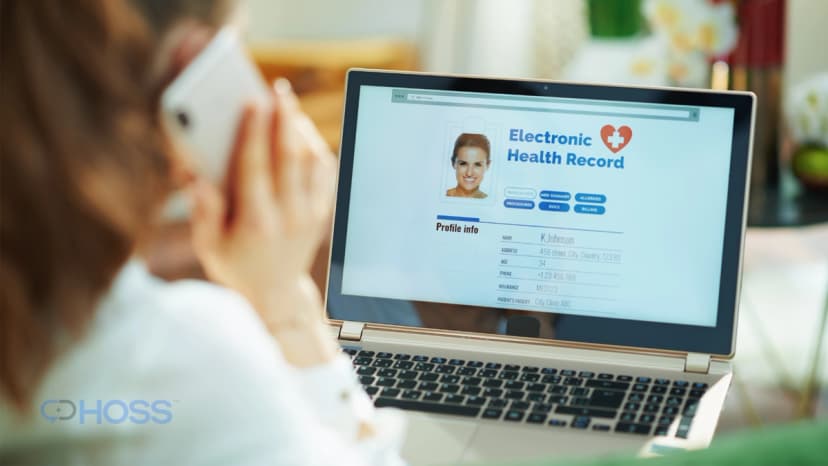
Why two-way EHR integration matters for RPM and CCM workflows, documentation, care coordination, and a more complete patient record.
A complete RPM workflow should move every patient reading toward review, follow-up, documentation, escalation when needed, and clear resolution.
Hoss Care Team
Healthcare Insights
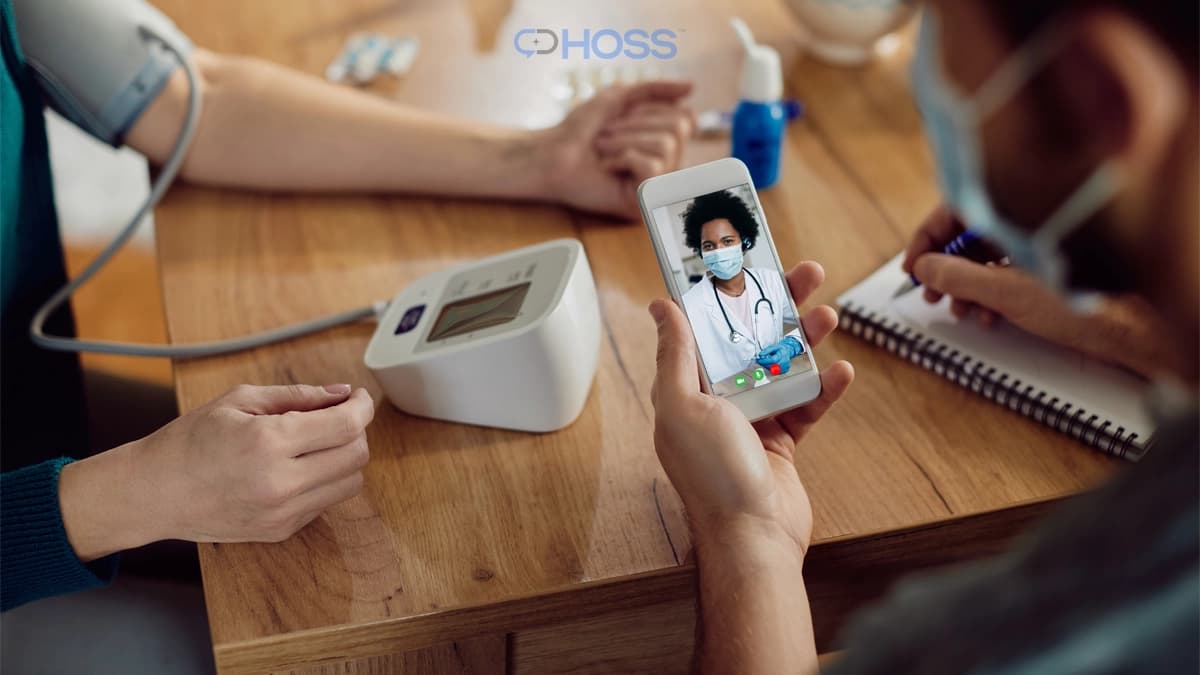
Remote patient monitoring begins with a reading, but it should never end there.
A blood pressure measurement, glucose level, weight change, heart rate, or oxygen saturation result can provide valuable insight into what is happening between office visits. Yet the presence of that information inside a dashboard does not automatically create better care. Its value depends on whether the care team can review it, understand it within the patient’s broader clinical context, and take the appropriate next step.
This is where remote patient monitoring software becomes more than a tool for collecting data. A complete RPM platform should help healthcare teams move from an incoming reading to a documented resolution, while maintaining clear responsibility throughout the process.
An individual measurement rarely tells the full story.
A blood pressure reading may appear unusually high, but its meaning depends on the patient’s history, previous measurements, current symptoms, medication use, and care plan. A sudden weight increase may require attention for one patient while being less significant for another. Even a missed reading can carry different meaning depending on the patient’s recent engagement and clinical condition.
For this reason, RPM software should help care teams view each reading as part of a longitudinal patient record rather than as an isolated number. Recent trends, previous outreach, documented concerns, and earlier care decisions all contribute to a more useful picture of the patient’s condition.
Without that context, teams may spend time responding to individual alerts without understanding the pattern behind them. With it, they can make more informed decisions about which information requires attention and what type of response may be appropriate.
Many RPM systems are effective at making patient data visible. The more difficult challenge is helping the care team act on it consistently.
When a reading enters the system, someone must determine whether it falls within the expected range for that patient. If it requires attention, the workflow must make clear who is responsible for reviewing it and what should happen next. The patient may need to be contacted for additional information, the case may require clinical escalation, or the care team may simply need to document that the reading was reviewed and that no further action was necessary.
When these steps occur across separate dashboards, spreadsheets, inboxes, and messaging tools, responsibility can become unclear. A reading may be visible to several people while still belonging to no one in particular. Follow-up may depend on manual reminders, and documentation may happen long after the interaction has taken place.
A complete RPM workflow should reduce this uncertainty by connecting the reading to an assigned action, a responsible team member, and a clearly recorded outcome.
Connected devices can collect physiological data, but they cannot always explain why a reading changed.
A patient may have taken a measurement incorrectly. A medication may have been missed. New symptoms may have appeared. A recent meal, illness, activity, or change in routine may have influenced the result. In many cases, a short conversation with the patient provides the context needed to understand what the data actually means.
That follow-up is one of the most important parts of remote monitoring.
The care team may contact the patient to review symptoms, confirm the reading, provide education, request another measurement, or determine whether additional clinical attention is needed. The software should help connect that interaction directly to the reading that triggered it, rather than leaving the conversation in a separate note or communication system.
This creates a more complete record of the care process. It shows not only that information was received, but also how the team responded.
Some readings can be handled through routine patient follow-up. Others may require review by a nurse, physician, or another authorised clinician.
When escalation is necessary, the process should be clear and visible. The appropriate person needs access to the original reading, the patient’s recent history, any symptoms discussed during follow-up, and the reason the case was escalated.
Without a structured process, escalation may depend on informal messages or verbal handoffs. This makes it more difficult to track whether the concern was reviewed, what decision was made, and whether further action is still required.
Remote patient monitoring software should support a defined path for moving a concern to the appropriate clinical team member while preserving the context surrounding the case. The software does not replace clinical judgement. It supports the operational process that allows clinicians to receive the right information and make the appropriate decision.
A device reading shows that data entered the system. It does not show what the care team did with it.
Complete RPM documentation should reflect the full sequence of activity. It should make clear when the reading was reviewed, whether the patient was contacted, what information was collected, whether education or guidance was provided, whether the case was escalated, and how the issue was ultimately resolved.
This distinction matters because remote care is not limited to data collection. Much of its value comes from the work performed after the reading appears: reviewing trends, communicating with the patient, coordinating with clinicians, updating the care plan, and documenting the result.
When this activity is recorded consistently, healthcare organisations gain a clearer picture of the care delivered between visits. They also create documentation designed to support audit readiness, while recognising that software alone does not guarantee compliance. Clinical oversight, staff processes, program requirements, and documentation quality remain essential.
An RPM workflow is incomplete until the issue reaches a clear outcome.
The patient may have been contacted and advised to repeat the measurement. A clinician may have reviewed the case and recommended a change in follow-up. The team may have confirmed that the reading did not require further action. In another situation, the concern may remain open because additional information is still needed.
Whatever the outcome, the status should remain visible to the care team.
Closing the loop prevents readings from disappearing into a dashboard after the first review. It also helps other team members understand what has already happened and what still needs attention. Instead of seeing only the original data point, they can follow the complete path from reading to resolution.
This continuity is especially important when several people contribute to the patient’s care. A care manager may complete the initial outreach, a nurse may review the symptoms, and a physician may make the final clinical decision. The workflow should connect those actions into one coherent patient story.
Remote monitoring should not operate as a separate stream of information disconnected from the patient’s wider clinical record.
When care teams work in one platform and document the same activity again in the EHR, administrative work increases. Important context may be lost during manual transfer, and other clinicians may not have a complete view of what happened between visits.
An EHR-connected care platform can help make relevant RPM activity more accessible within the broader care process. This does not mean transferring every raw data point into the EHR. It means ensuring that meaningful readings, patient interactions, clinical escalations, and completed actions can be documented in a way that supports continuity.
The objective is a two-way care environment in which the RPM team can work with the necessary patient context while the wider clinical team retains visibility into significant remote care activity.
As RPM programs grow, care teams may be responsible for reviewing large volumes of patient information. AI-supported tools can help organise that workload by highlighting trends, summarising recent activity, identifying incomplete tasks, and helping teams prioritise cases that may require attention.
The role of AI should remain supportive.
Clinical decisions must continue to be made by qualified healthcare professionals. Technology can make information easier to review and workflows easier to manage, but it should not remove human oversight from the care process.
An effective AI-supported RPM model helps the care team understand where attention may be needed while keeping clinicians responsible for interpreting the information and determining the appropriate response.
The strongest RPM programs do more than collect readings. They create continuity between the data, the patient, and the care team.
The process begins when a measurement enters the system, but it continues through contextual review, patient outreach, clinical escalation, documentation, and final resolution. Each stage should remain connected so that the team can understand what happened, who was responsible, and whether additional action is still needed.
This is the difference between having remote patient data and operating a complete remote care program.
Hoss Care is designed to help healthcare organisations manage the operational work surrounding remote patient monitoring.
The platform connects patient information with structured workflows, care-team responsibilities, follow-up activity, escalation processes, longitudinal monitoring, EHR-connected documentation, and program reporting. HossConnect supports the movement of patient data into the connected care environment, while Hoss Care helps teams manage the actions that follow.
Rather than treating readings, patient outreach, documentation, and reporting as separate activities, the platform brings them into a more coordinated workflow.
This gives teams greater visibility into which patients require attention, what work has already been completed, what remains unresolved, and how each case moved from the original reading to the final outcome.
The success of an RPM program should not be measured only by how many readings it collects.
The more meaningful measure is whether the organisation can turn those readings into timely, coordinated, and documented care.
A complete RPM workflow gives every important reading a clear path forward. It connects information with responsibility, patient follow-up, clinical judgement, documentation, and resolution.
Because in remote patient monitoring, collecting the reading is only the beginning.
Discover how Hoss Care supports structured RPM workflows, EHR-connected documentation, patient follow-up, clinical escalation, longitudinal monitoring, and program reporting.
Explore Hoss Care for RPM.
Last updated August 20, 2026
See how Hoss Care can help you implement these strategies in your practice.
Book a demoExplore the HossConnect EHR & device hubWhy two-way EHR integration matters for RPM and CCM workflows, documentation, care coordination, and a more complete patient record.
See how RPM, CCM, and BHI share one connected workflow while preserving program-specific responsibilities.
Blood pressure monitors, glucose meters, pulse oximeters, with so many options, how do you pick? A practical guide to device selection and patient matching.