
Technology5 min read
The two-way record: Why care management data must move back into the EHR
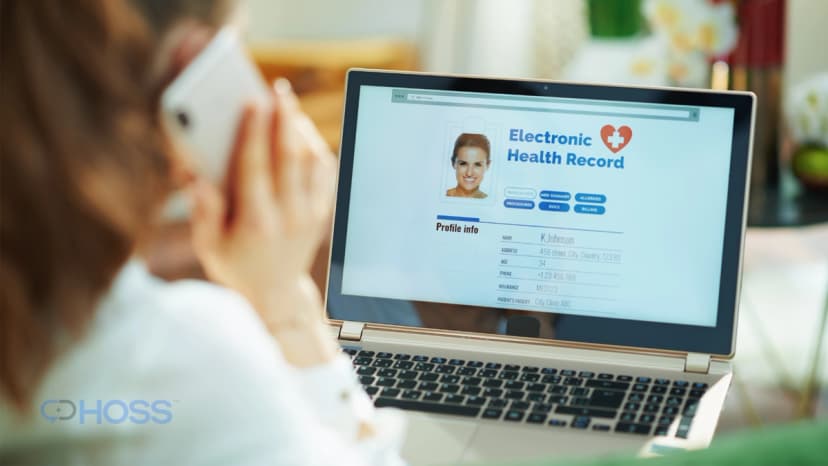
Why two-way EHR integration matters for RPM and CCM workflows, documentation, care coordination, and a more complete patient record.
See how RPM, CCM, and BHI share one connected workflow while preserving program-specific responsibilities.
Hoss Care Team
Healthcare Insights

A patient’s needs rarely fit neatly inside a single care program.
A person managing hypertension may generate daily readings through Remote Patient Monitoring (RPM), receive ongoing support through Chronic Care Management (CCM), and require behavioral health follow-up through Behavioral Health Integration (BHI). Although each program serves a distinct purpose, the patient experiences them as parts of the same care journey.
The operational challenge is ensuring that care teams see the same patient story.
A connected care platform brings these activities into a coordinated operational model. It does not erase the distinctions between RPM, CCM, and BHI. Instead, it helps teams manage their separate responsibilities through shared workflows, visible handoffs, connected documentation, and clearly assigned follow-up.
Each care program captures a different part of the patient’s health.
RPM gives care teams access to physiologic data collected between visits. According to the Centers for Medicare & Medicaid Services, RPM includes patient education and device setup, the collection and transmission of data from a connected medical device, and the treatment or management that follows clinical review.
CCM focuses on coordinating care for patients living with two or more chronic conditions that require ongoing management over an extended period. According to CMS guidance on Chronic Care Management, CCM includes comprehensive care planning, ongoing follow-up, care-transition support, and coordination within and outside the practice.
BHI brings behavioral health assessment, care planning, monitoring, treatment coordination, and continuity into the wider care process.
These programs may be operationally distinct, but their information is often clinically related. A change in blood pressure may affect a CCM care plan. Missed readings may point to an engagement barrier. Anxiety, depression, medication concerns, or social circumstances may influence whether the patient can follow the recommended plan.
When these details remain in disconnected systems, the care team must reconstruct the patient’s situation manually.
Fragmentation does not always occur inside a single program. It often appears in the space between programs, where one team’s information becomes relevant to another team’s work.
An abnormal RPM reading may be reviewed without the reviewer knowing that the patient recently reported medication side effects during a CCM call. A behavioral health care manager may document worsening anxiety without visibility into a new physical-health concern. Another team member may contact the patient without knowing that follow-up has already occurred.
The result can be:
Repeated patient outreach
Unclear ownership of the next action
Delayed review or escalation
Duplicate documentation
Relevant information stored outside the primary workflow
An incomplete longitudinal view of the patient’s care
The problem is not simply that an organization operates several programs. It is that the tasks, decisions, communications, and outcomes generated by those programs may not remain connected around the patient.
A care coordination platform should help authorized team members understand what has happened, what requires attention, and who is responsible for the next action.
Consider a patient enrolled in RPM, CCM, and BHI. An RPM reading moves outside the patient’s established range. When the assigned team member reviews it, the workflow also makes relevant context visible: a recent CCM note about medication concerns and a BHI follow-up indicating increased anxiety.
The three programs still require different work. However, the team no longer has to assemble the patient’s situation from separate systems before deciding what to do next.
Within a shared workflow:
The RPM activity remains associated with its monitoring process.
The CCM care plan provides longitudinal context.
Relevant BHI information helps the team understand possible behavioral barriers.
Responsibility for review and follow-up is clearly assigned.
The clinician evaluates the combined context and makes the clinical decision.
The outcome becomes visible to the team members responsible for subsequent care.
This is what makes connected care operational rather than conceptual. The connection is not merely that three program names appear on one dashboard. It is that relevant context can move with the work while responsibility remains clear.
RPM, CCM, and BHI have different service components, documentation expectations, workflows, and clinical objectives. Placing them within one operational environment should not make them interchangeable.
A well-designed care management platform preserves program-specific requirements while connecting the information needed for coordinated care.
Organizations should still be able to maintain:
Separate enrollment and eligibility records
Program-specific care plans and tasks
Appropriate activity and time documentation
Defined clinical and administrative responsibilities
Clear review and escalation pathways
Traceable patient communications
Program-level performance reporting
At the same time, the care team should have a unified view of the patient’s active programs, recent interactions, unresolved needs, assigned responsibilities, and next steps.
The goal is not one generic workflow. It is coordinated execution across several structured workflows.
AI can support connected care by helping teams organize information, prioritize work, and identify items that may require review. In a multi-program environment, it may also help surface relationships that are easy to miss when patient activity is distributed across different queues and teams.
An AI-first connected care model can support:
Prioritization of patient activity for human review
Identification of open or incomplete tasks
Visibility into possible care gaps across programs
Routing of work to the appropriate team member
Summaries of relevant activity across the patient journey
Documentation checks against defined program rules
However, AI-supported workflows must preserve the distinction between operational assistance and clinical judgment.
System-generated insights remain advisory. Clinicians and authorized care-team members evaluate the patient’s context, determine the appropriate response, and retain authority over clinical decisions.
A connected care platform should work alongside the EHR and other clinical systems rather than create another isolated record.
Its role is to support the operational work that occurs across and between patient encounters: assigning tasks, maintaining follow-up, coordinating teams, recording program activity, and keeping unresolved needs visible.
This matters because the value of connected care software depends on continuity. The relevant result of an RPM review, a CCM interaction, or a BHI follow-up should not disappear inside a separate operational queue. It should remain connected to the patient’s broader care story and available to the professionals responsible for the next step.
The practical measure of a connected model is whether the care team can answer a small set of cross-program questions:
Which programs are active for this patient?
What has changed since the last interaction?
Is there relevant context from another program?
Who owns the next action?
Has the patient already been contacted?
What work remains unresolved?
Answering these questions consistently creates a clearer operating picture for the care team. It also produces documentation designed to support operational visibility and audit readiness without turning every program into the same process.
This is the purpose of care execution infrastructure: not simply to store information, but to help organizations move coordinated work forward while preserving responsibility, clinical oversight, and program structure.
Hoss Care is designed for healthcare organizations running regulated care programs through structured workflows.
Within the HossCare platform, patient monitoring, care coordination, communication history, task assignment, follow-up, and program documentation can be managed through a shared operational environment.
HossCare is not positioned as an EHR replacement or as a point solution for one care program. It works alongside existing clinical systems and supports RPM, CCM, BHI, and other regulated care programs through program-specific workflows.
Its role is practical: helping healthcare organizations coordinate work, keep responsibilities visible, document patient interactions, manage review and escalation processes, and report on program activity. AI-supported insights operate alongside clinician oversight rather than replacing clinical judgment.
For patients enrolled in multiple care programs, better coordination requires more than access to additional data. It requires a reliable way to connect information with the people, responsibilities, and next steps surrounding the patient.
A connected care platform gives organizations the infrastructure to manage separate programs without fragmenting the patient story. When RPM, CCM, and BHI operate through coordinated workflows, teams gain a clearer view of patient needs, active responsibilities, completed actions, and unresolved follow-up.
The goal is not to make every program the same. It is to help every program contribute to one coordinated care journey.
See how Hoss Care brings regulated care programs into one connected operational model.
Explore the Hoss Care platform or view its supported care programs.
Centers for Medicare & Medicaid Services. Remote Patient Monitoring. Updated May 13, 2026. Read the CMS guidance.
Centers for Medicare & Medicaid Services. Chronic Care Management Services. Medicare Learning Network. Read the CMS booklet.
Centers for Medicare & Medicaid Services. Behavioral Health Integration Services. Medicare Learning Network, January 2026. Read the CMS booklet.
Last updated August 20, 2026
See how Hoss Care can help you implement these strategies in your practice.
Book a demoExplore the HossConnect EHR & device hubWhy two-way EHR integration matters for RPM and CCM workflows, documentation, care coordination, and a more complete patient record.
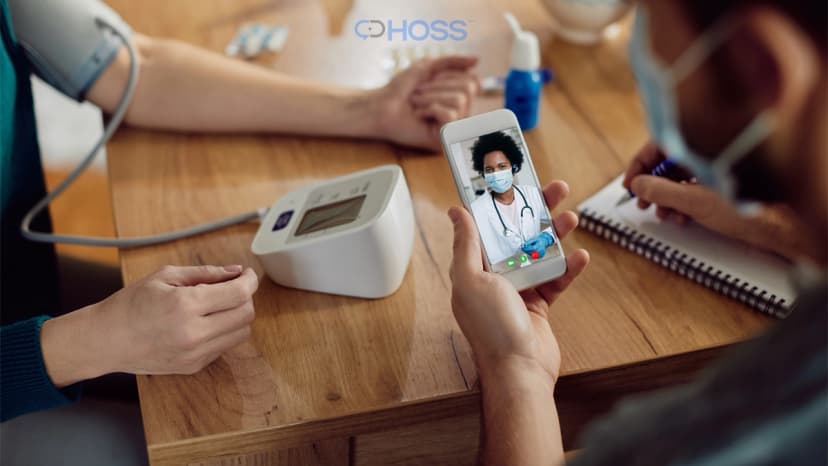
A complete RPM workflow should move every patient reading toward review, follow-up, documentation, escalation when needed, and clear resolution.
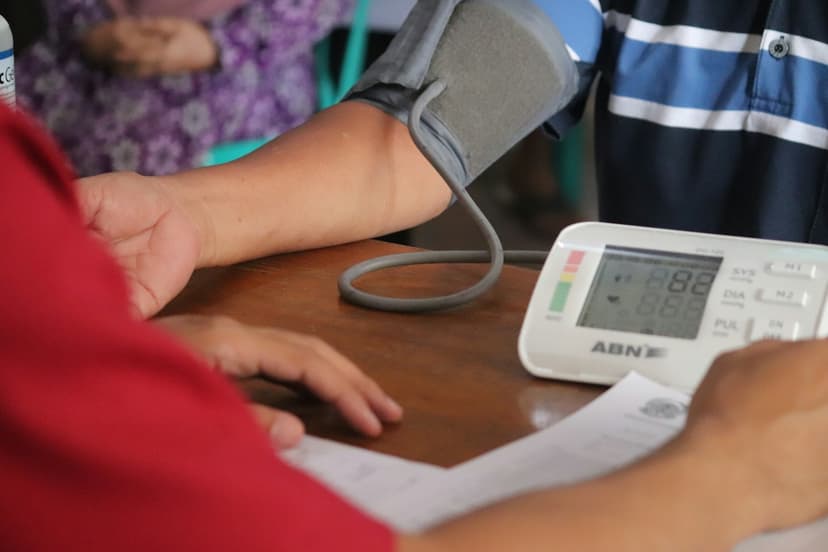
Blood pressure monitors, glucose meters, pulse oximeters, with so many options, how do you pick? A practical guide to device selection and patient matching.